The life and legacy of Kitty Genovese Revisited
New Yorkers and myself, Donna R. Gore, gathered at the dinner table recently and discussed the horrendous and groundbreaking case of Kitty Genovense. (July 7, 1935-March 13, 1964)
“I didn’t want to get involved.” Comment by Kitty’s neighbor, Karl Ross after he finally called the police.
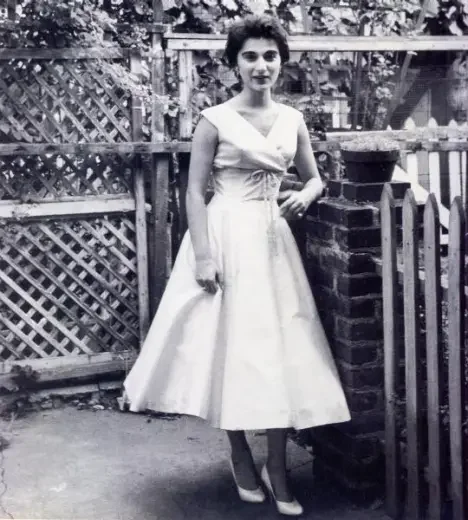
(Kitty at her home in Kew Gardens, Queens, NY. From the documentary The Witness. Photograph: Courtesy of the Genovese Family/Five More Minutes Productions)
Those of us who are baby boomers recall, to some degree,the horrific killing of Catherine (Kitty) Genovese in Kew Gardens-Queens, New York 1964.
This murder was portrayed as if “the world stood by and watched and spectators” and no one meaningfully came to her aid in a manner that could have saved her life.
A young working class woman arriving home late (3:15 a.m.) from her job as a bar manager who just happened to be a lesbian (when it wasn’t “popular” or talked about). Kitty’s stalker and murderer, Winston Moseley, left and came back to finish the job by fatally stabbing and raping Kitty.
What motivates us to assist versus “looking the other way?”
It depends upon a person’s moral character and the circumstances of the specific situation. All of us are not “doers” or “social workers in disguise” by nature. If everyone had the same moral fiber and true sense of right and wrong, we would have far less criminals.
Could it be that Kitty’s last words, “I’m dying, I’m dying… Someone help me.” was just part of the usual banter of tenement living in just another urban neighborhood, as Kitty desperately struggled from one end of the building to another during the 30 minute attack? Some have raised questions about her continued ability to scream when her attacker punctured her lungs.
There is considerable dispute as to how many actually ignored Kitty’s pleas. The March 27, 2004 New York Times article quoted 38 neighbors or persons who heard screams and did nothing. Prosecutors and police determined that it was more like one dozen , with one person actually reporting the event . One neighbor supposed yelled, “Let that girl alone;”
Spectators and police obviously interpreted it as “a family argument or drunken brawl.”
Kitty lay dying in her hallway after his subsequent attacks and, as a final act, he raped her.
Winston Moseley, the confessed killer and rapist, had a track record as long as one’s arm, with far too many opportunities to cheat the system. He claimed he should have been allowed to plead insanity. As a result of this ploy, his initial death sentence was reduced to the indeterminate sentence of life in prison. He died in prison in Dannemora, in March 2016 at age 81.
The most infuriating aspect was that Moseley actually was allowed to earn a BA in Sociology in prison in the late 1970’s according to a Court TV Library story.
After her death, Kitty Genovese unknowingly changed the course of social psychology and created the “Bystander effect” postulated by social psychologists Bibb Latane and John Darley that “contrary to common expectations, large numbers of bystanders decrease the likelihood that someone will step forward and assist.” According to the theory, they feel uncomfortable and uncertain how to help. “Others have it covered. No reason to get involved.”
Whether the bystander effect is a true psychological construct, Kitty’s untimely death changed the course of social psychology to this day!
The Aftermath- and Kitty’s legacy included the creation of the initial 911 emergency system with the help of A T &T on February 16, 1968 in Haleyville, Alabama.
Continuing the legacy, Bill Genovese, brother of Kitty Genovese, a disabled Vietnam Veteran took on the quest to right the wrongs on the night of March 13, 1964. He interviewed all witnesses and even corresponded with the evil perp in preparation for his innovative film, The Witness. A “devil’s advocate style” 2016 NPR article conveys the ambivalence of it all, appears to question Bill’s motives, reveals possible reasons for the lack of witnesses coming forward 50 years ago and concludes that the myths will never fade.
WATCH this moving trailer of “ The Witness” on YouTube- https://www.youtube.com/watch?v=EAGOoF5CDXA
It seemed that in 1964, the New York Times rushed to judgment on its facts. The number of neighbors who ignored Kitty’s cries for help and the infamous L – Lesbian word, just made everything all the more shocking, as most women were still closeted. The Stonewall Inn demonstrations did not take place until five years later.
In April 2016, the New York Times interviewed Kitty’s partner, Mary Ann Zielonko Her account of that night is filled with trepidation, regret, and pain. There was the joy of meeting someone you click with, residing in a safe artsy neighborhood with Holocaust survivors as neighbors. They worked together in a bar and played together. But, to this day, Mary Ann feels she might have saved Kitty, for while Mary Ann returned from bowling and slept, Kitty was being murdered, as the evil man returned a second time to stab her yet again!
Takeaways - Kitty Genovese was a lovely woman whose life ended in a horrific manner.
As a result of her murder and rape, society itself was put under the microscope as the Bystander effect was conceived and continues to be taught as part of the principles of psychology in 2026.
Kitty Genovese was a closeted lesbian who lived with her partner as roommates only to the public, due to the significant homophobia that existed in the 1960’s.
***Read about a true love story - a match made in lesbian heaven.-

Thanks for reading! Commentary and sharing is appreciated!
Doonna R. Gore Writer- Author