Earning Your Way Up the Stairway to Heaven (It’s an Uphill Climb For Victim Advocates)
The recent death of Dolly Parton had me reflecting on what a truly amazing, positive and selfless person she was to all. She truly earned her way up the stairway to heaven the hard way… in so many ways.
It also made me think about why the journey on earth can be so difficult, even for those of us who have experienced trauma and tragedy and give back because and in spite of it. I believe I have more than earned my way to heaven as well…
However, this blog discusses the way that path is impeded for victim advocates by unsupportive, disinterested family and friends.
There are many challenges in life. For those of us who have the unfortunate circumstance to be a victim of crime and then ‘graduate to survivorship and down the road ... .even thriving, It is truly a cause for celebration!
For many of us who choose to be an advocate, it is initially as a means of coping versus wallowing in our grief.
As we continue down this path, we are able to see the fulfillment and true rewards by assisting others.
When tragedy occurs, there is no blueprint… and most often, family members are all over the map in terms of how they cope.
But, what I have learned from personal experience as well as from my colleagues, is that other family members can’t accept the long haul nature of such a commitment.
They may view it as needlessly dredging up the past, or thinking we are forever stuck in our grief. They may be embarrassed or jealous of our accomplishments assisting others, perhaps if we receive some degree of notoriety.
This may build up over the years as a cause for resentment, when in reality we should be respected for our ability to navigate the trials and tribulations. What once was an enormous burden on our lives can be turned into a positive in some respects for the benefit of many! No, we are not one dimensional characters who spend 24 hours a day ‘doing that thing’ that family members avoid or ignore.
We try to take time out for ourselves, dabble in other pursuits or hobbies. However, they often don’t see it. Even trying to engage family about other activities, may fall flat, as in my case. Why, why, why are we treated this way?
Isn’t it enough to persevere through the event that turned our world upside down … while living with other personal challenges and still see the light at the end of the tunnel? This understanding appears to be beyond their capabilities.
One reason for this is not sharing values.
On a personal level, unshared values cause interpersonal conflict, and may cause identity problems, alienation and low self esteem in some people. Schwartz’s Theory of Basic Human Values outlines how people rank their own priorities within ten values-
The theory of basic values identifies ten core values and also examines their interrelationships. Pursuing certain values can either align with or conflict against others.
For instance, conformity and security align, while benevolence and power often conflict. Tradition and conformity share similar motivational goals and thus are grouped within the same category.
The Schwartz survey entails 57 questions with two lists of value items. The first list consists of 30 nouns, while the second list contains 26 or 27 items in an adjective form. Each item is followed by a brief description for clarification. Out of the 57 questions, 45 are used to compute the 10 different value types –
(The survey has been conducted so far on more than 60,000 individuals in 64 nations.)
1.Power and Achievement – social superiority and esteem
2 Achievement and Hedonism – self-centered satisfaction
3 Hedonism and Stimulation – a desire for affectively pleasant arousal
4 Stimulation and Self-direction – intrinsic interest in novelty and mastery
5 Self-direction and Universalism – reliance upon one's own judgement and comfort with the diversity of existence
6 Universalism and Benevolence – enhancement of others and transcendence of selfish interests
7 Benevolence and Tradition – devotion to one's in-group
8 Benevolence and Conformity – normative behavior that promotes close relationships
9 Conformity and Tradition – subordination of self in favor of socially imposed expectations
10 Tradition and Security – preserving existing social arrangements that give certainty to life
11 Conformity and Security – protection of order and harmony in relations
12 Security and Power – avoiding or overcoming threats by controlling relationships and resources
Without taking the survey, we probably can predict which values are most and least important to us and our family members.
Another source of conflict with families may be the act of observing what were traditional events in life, but not perceived as important by some, such as anniversaries, birthdays, trial sentencing dates, after the death of a loved one. We are ‘needlessly stirring it up’ as they see it. Advocates view it as part of legacy building.
There are no real numbers or studies reported demonstrating the number of family members who are apathetic to family members who chose to be victim advocates serving others.
However, about 50% report high levels of exhaustion, stress and burnout, (Secondary Traumatic Stress) known as ‘compassion fatigue
Whereas others, such as me, who have embraced the task over time in order to make positive change and self-healing occur. However, within the past year, I have reset some major goals and have drawn the line after an important judicial event occurs this year.
There is a real ‘cost of caring’ when family members and friends cannot relate to, engage in or support in any way the realities of the work.
Often the only alternative is to locate peer support by those who are also committed.
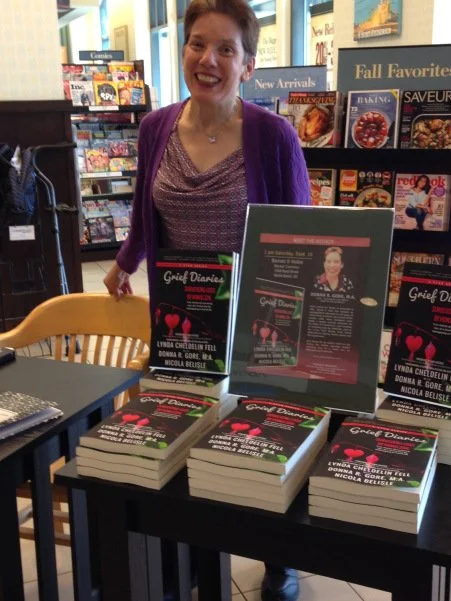
The real shame of it all is that when we do step away from the intense role and decelerate and and try to re-focus on other pursuits as a replacement or in addition to some advocacy, those important changes are not noticed either.
I often wonder if part of the problem in not being supportive, other than unshared values, is that those individuals have never sufficiently tried to deal with their personal demons, nor tried to heal, such that we pay the price of such disconnection?
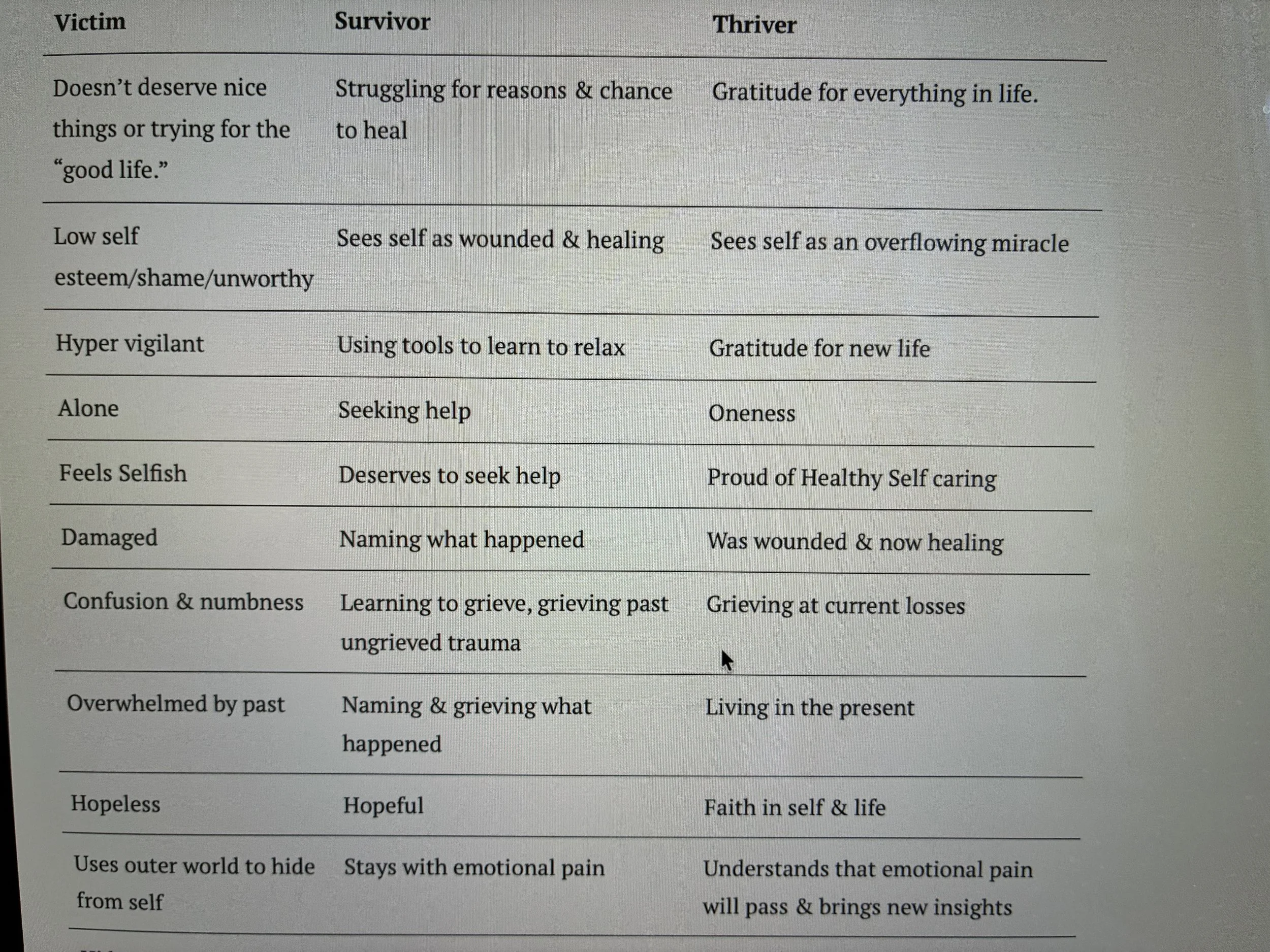
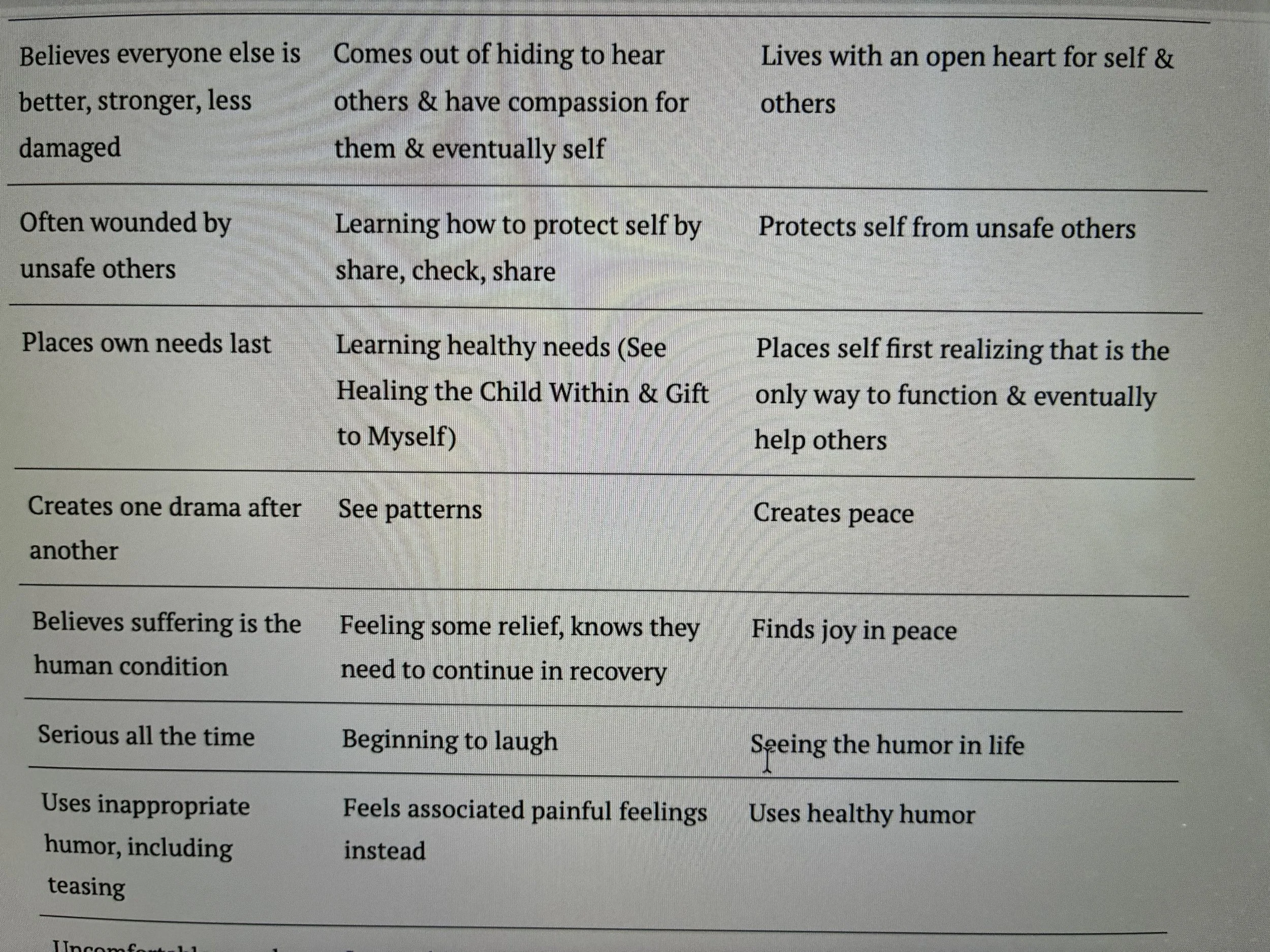
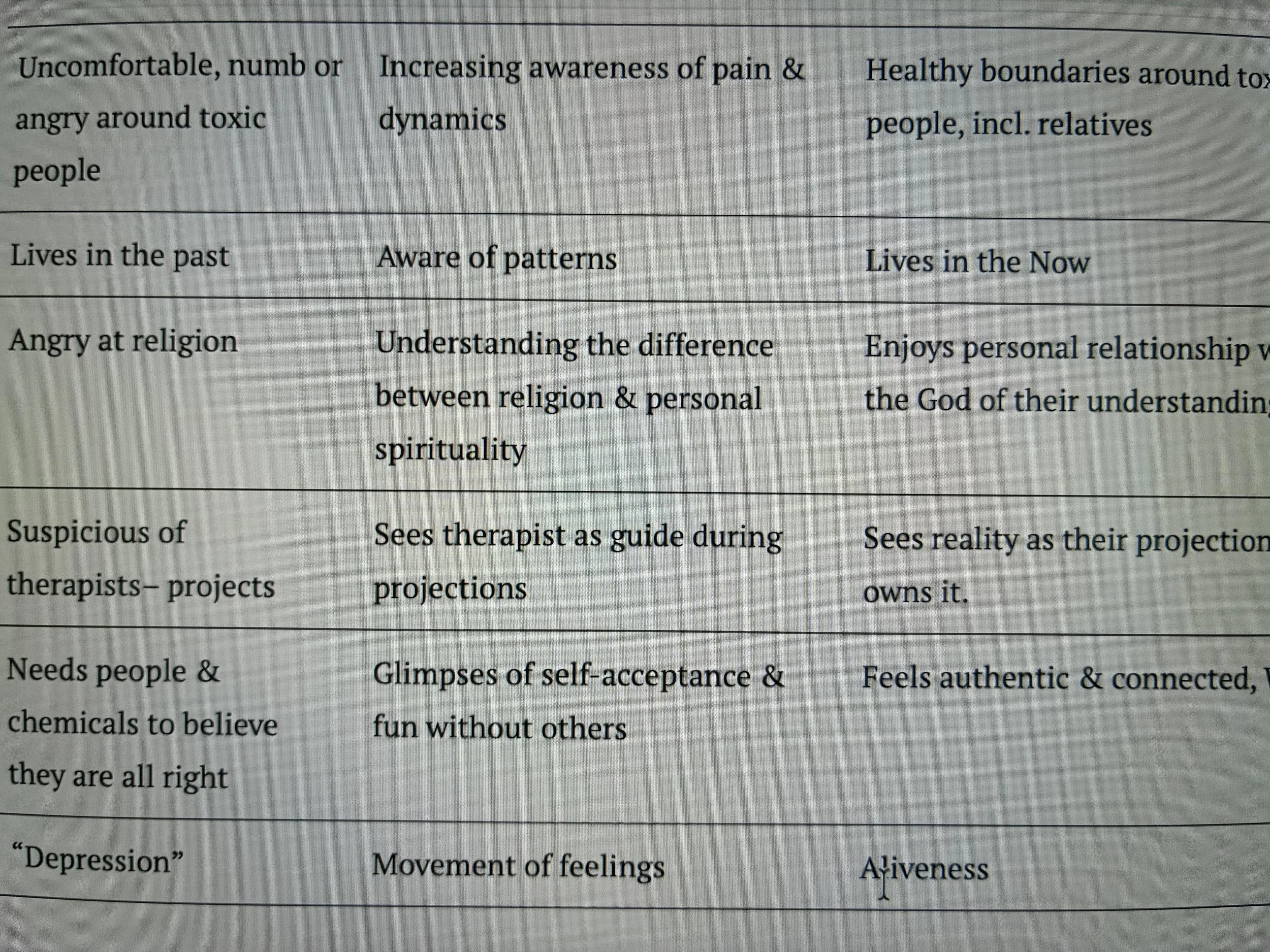
I reflect back to this wonderful demonstration of personal growth known as the Victim, Survivor, Thriver Chart, developed in 2003 by Dr. Barbara Whitfield a thalantologist (An expert in the study of death and dying).
As we grieve, we have lots of false starts and stops. It is definitely a one step forward, two steps back proposition. However, with time, we can see true progress. I have progressed to the point of being a thriver, but I do still have my moments of regression, even after 45 years.
I invite you to find your place on the chart, reading from left to right, to identify your status. I encourage you to begin moving forward with the help of a grief therapist and a support group.
From Victim to Survivor to Thriver
Conclusion- As renowned psychiatrist and death and dying expert, Elisabeth Kubler-Ross stated - "You will grieve forever. You will not ‘get over’ the loss of a loved one…. You will learn to live with it. You will heal and you will rebuild yourself around the loss you have suffered.”
I contend that the re-building is the hardest part, which may never come together as you would like it to be.
Thanks, for reading, sharing and commenting on this information!
Take a look at these offerings before you go…
Warm Regards,
Donna